
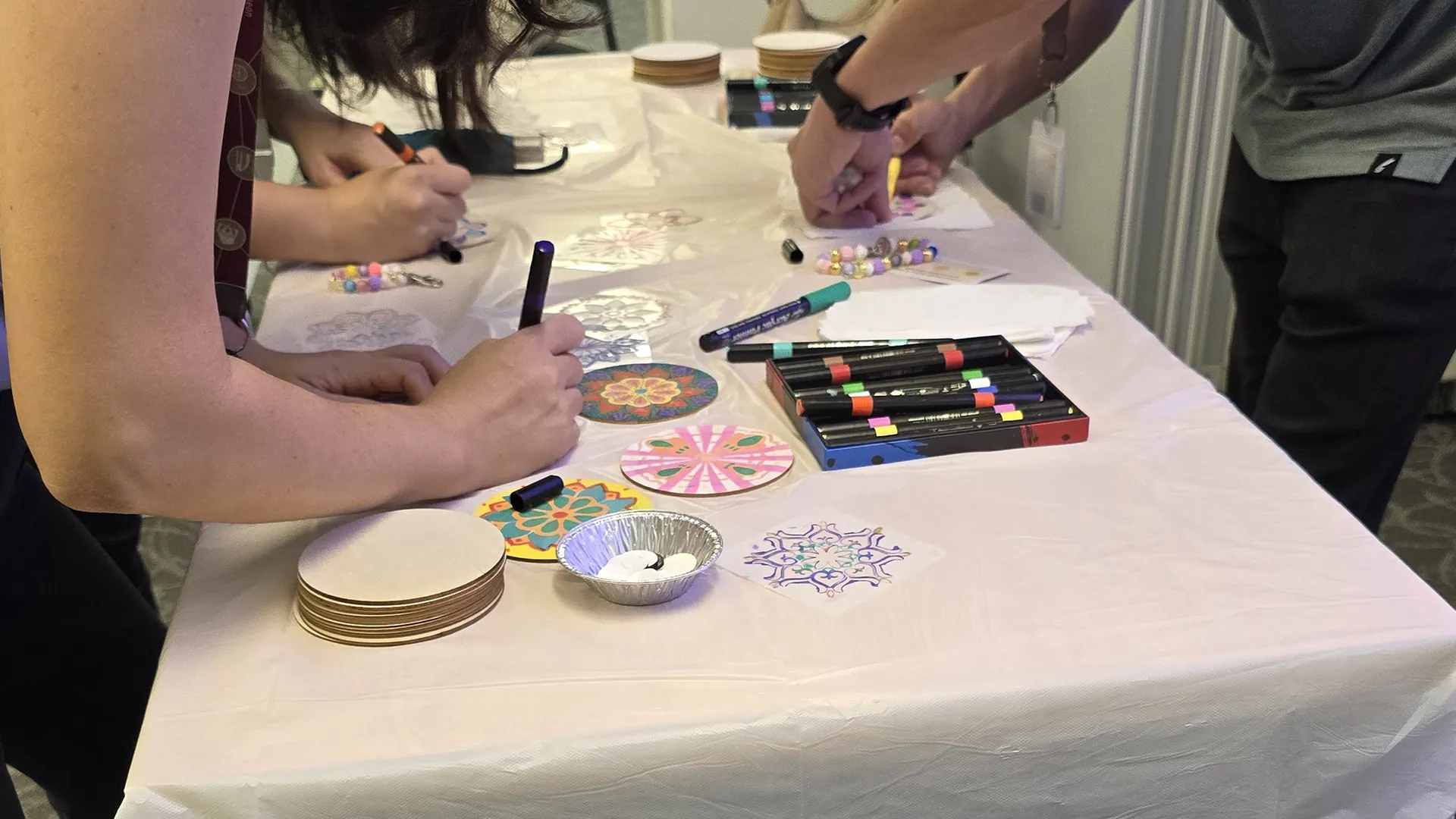
Corporate art workshops have moved well past the occasional “paint and sip” novelty. More companies in Singapore are now using creative sessions as a genuine tool for employee engagement, whether that means breaking the ice at a small department gathering or anchoring an entire company offsite. The challenge most event planners and HR teams run into is not whether to include an art activity, but figuring out which format actually suits their team’s size and setting.
A workshop designed for twelve colleagues in a meeting room works very differently from one built for two hundred people at an annual dinner. This guide breaks down practical corporate art workshop ideas by team size, so you can match the right format to the right event rather than defaulting to a generic session that does not fit the room.
Why Format Matters More Than the Activity Itself
Many companies choose an art workshop based purely on the activity, such as painting or sketching, without thinking through how that activity actually works at their specific group size. A beautiful collaborative mural concept can fall flat with only six participants. A detailed individual painting session can become logistically difficult with two hundred people and limited space.
Before choosing a workshop, it helps to think through three questions. How many people are attending. How much time is actually available. And what is the goal, whether that is bonding, relaxation, celebration, or simply a memorable shared experience.
Small Teams (5 to 15 People)
Small group settings are ideal for more personal, detail oriented art activities, since there is enough space and instructor attention for everyone to genuinely engage rather than just observe.
Individual artwork with shared theme. Each participant creates their own piece, but around a common theme or prompt, such as “what this team means to me” or a shared project milestone. This keeps the activity personal while still creating a visual thread that connects everyone’s work.
Guided painting or sketching session. A relaxed, instructor led session where the team learns a specific technique together, such as watercolour basics or simple portrait sketching. This format works especially well for smaller, more intimate team bonding sessions where conversation naturally flows alongside the activity.
Collaborative small mural. With a smaller group, a single collaborative canvas or wall mural becomes genuinely achievable within a few hours, giving the team a tangible, shared piece to display in the office afterwards.
Mid-Sized Departments (15 to 40 People)
This range often works best with activities that balance individual contribution with a collective outcome, since full personal attention from one instructor becomes harder at this scale.
Group mural panels. Instead of one large mural, the group is split into smaller sub-teams, each working on a separate panel that later combines into one larger artwork. This keeps engagement high within each sub-group while still producing an impressive combined piece for the department.
Themed creative stations. Multiple stations are set up around different techniques or mediums, allowing participants to rotate and try a few different creative activities rather than one long single session. This works well for departments wanting variety over a half day event.
Team-based creative challenges. Small teams compete or collaborate on a creative brief within a set time limit, such as designing a visual representation of a company value or project. This format naturally encourages communication and light hearted competition.
Large Groups and Company-Wide Events (40 People and Above)
At this scale, logistics become the main consideration. Activities need to be simple enough to explain quickly, scalable across multiple tables, and manageable within a tighter per-person time frame.
Large scale collaborative mural. A single oversized canvas or wall, divided into a grid, with each participant or small group responsible for one section based on a unified design guide. This is one of the most popular formats for company-wide events, since it produces a genuinely impressive final piece that can be displayed in the office long after the event.
Simplified individual takeaway pieces. A straightforward, guided activity such as a simple canvas painting or tote bag design, where every participant completes a small, satisfying piece to take home within a limited timeframe. This works well alongside other event programming, such as during a dinner and dance, where art is one activity station among several.
Department versus department creative showcase. Each department or table group works on a themed piece within a set time, with pieces displayed and voted on at the end. This adds a light competitive, celebratory element well suited to large annual events.
Matching the Right Format to Your Goal
- For genuine team bonding and deeper conversation, smaller, slower paced sessions tend to work better than large scale activities
- For company culture and visible team spirit, collaborative murals and group projects create a lasting physical reminder of the event
- For a relaxing, low pressure break from work, simplified individual takeaway pieces are usually the easiest to manage and most consistently enjoyed
- For celebratory, large scale events, formats with a visual showcase or light competition tend to generate the most energy in the room
Planning Considerations Beyond the Activity Itself
A few practical factors are worth confirming early, regardless of group size.
- Venue and space requirements, especially for mural-based activities that need wall or floor space
- Time allocation, since rushed art activities can feel stressful rather than relaxing if the group is not given enough time
- Materials and setup, including whether the venue allows paint or requires mess-free alternatives
- Facilitation style, since a well briefed instructor who can read the room and adjust pacing makes a noticeable difference to how the session actually feels
How Strokearts Supports Corporate Art Workshops
Strokearts works with companies across different team sizes to design corporate art workshops that fit the specific event, rather than offering a single fixed format for every group. Whether it is a smaller department bonding session or a company-wide collaborative mural for a larger event, sessions are planned around the group size, available time, and desired outcome. For teams exploring creative team building for the first time, it also helps to browse general program offerings to get a sense of teaching style and studio approach before committing to a specific workshop format.
Companies interested in planning a workshop can get in touch to discuss team size, event goals, and available dates, so the format can be tailored well ahead of the actual event rather than decided last minute.
Frequently Asked Questions
What is the best corporate art workshop format for a small team of under 15 people?
Smaller teams generally benefit most from individual artwork around a shared theme or a guided painting session, since the format allows for genuine instructor attention and deeper group conversation.
Can large company events of 100 or more people realistically do a collaborative mural?
Yes. Large scale murals are typically divided into a grid, with each participant or small group completing one section based on a unified design, making the activity scalable without requiring every person to work on the full piece individually.
How much time should be allocated for a corporate art workshop?
This depends on the format, but most sessions work well within one and a half to three hours. Simplified individual takeaway pieces can work in shorter slots, while detailed murals or guided painting sessions usually need more time.
Do corporate art workshops require any prior art experience from employees?
No. Most corporate art activities are designed to be approachable for complete beginners, with instructors guiding participants through simple, achievable steps regardless of skill level.
What is the difference between a mural workshop and individual takeaway art activities?
A mural workshop produces one combined, collaborative piece that reflects the whole team or company, often displayed in the office afterwards. Individual takeaway activities instead give each participant their own finished piece to keep personally.