
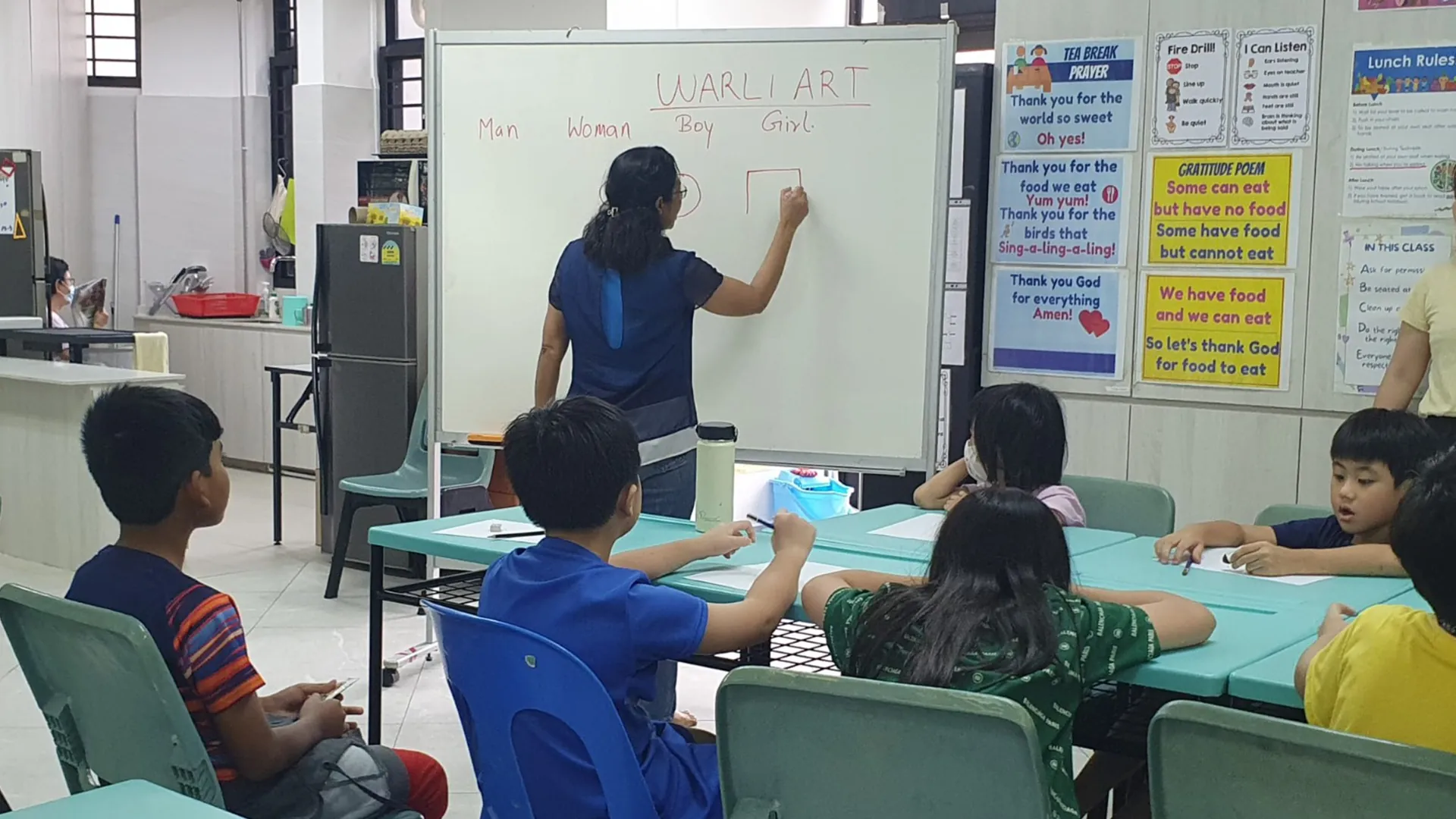
Art workshops in schools often get treated as a break from “real” learning, a fun session slotted between exam revision and regular lessons. But when a workshop is deliberately built around what students are already studying, it becomes something far more valuable. It turns abstract classroom concepts into something students can see, touch, and create, which tends to make the learning stick in a way a textbook chapter rarely does.
For teachers, enrichment coordinators, and school event planners in Singapore, the real question is not whether art workshops are worth running. It is how to plan one that actually connects to a curriculum theme, rather than existing as a standalone activity disconnected from everything else students are learning that term.
Why Curriculum-Linked Art Workshops Work So Well
Interdisciplinary art, where a creative activity is tied directly to another subject, taps into a different kind of learning than a standard lecture or worksheet. This approach, often called experiential learning, works because students process information differently when they are actively creating something tied to a concept, rather than passively absorbing it.
A few reasons curriculum based art workshops tend to leave a stronger impression:
- They give abstract ideas a physical, visual form students can actually see and remember
- They cater to visual and kinaesthetic learners who may struggle with purely text based lessons
- They encourage students to interpret information personally, rather than simply memorising it
- They create a shared classroom activity that naturally sparks discussion between students
This is why school enrichment programs increasingly look for art workshops that connect directly to what is already being taught, rather than a generic “paint whatever you like” session.
Matching Art Workshops to Different Subjects
The beauty of using art as a teaching tool is that it genuinely adapts across almost every subject area. Here are practical ways to connect a workshop to common curriculum themes.
History
Art has always documented history more vividly than dates and facts alone. A workshop tied to a history unit could involve students recreating scenes from a historical period, designing propaganda-style posters from a specific era, or illustrating a timeline of events through a connected visual narrative.
Geography and Environmental Studies
Environmental studies and geography units pair naturally with art focused on landscapes, ecosystems, or climate themes. Students might create layered artwork showing different biomes, design posters around sustainability topics, or illustrate the water cycle as a creative diagram rather than a static textbook image.
Culture and Social Studies
This is one of the richest areas for curriculum-linked art, particularly in a multicultural country like Singapore. Workshops introducing traditional art forms such as Indian folk art styles, for example, give students a hands-on way to understand cultural heritage, symbolism, and storytelling traditions, connecting directly to social studies units on diversity, migration, or regional history.
Science
Science and art may seem like an unlikely pairing, but scientific illustration has a long, genuine history. Workshops can involve students illustrating plant anatomy for a biology unit, creating diagrams of the solar system, or visually representing scientific processes such as photosynthesis or states of matter.
Language and Literature
For literature units, students can illustrate scenes from a novel or poem they are studying, design alternative book covers, or create visual character studies, all of which deepen comprehension by requiring students to interpret the text closely enough to represent it visually.
Adapting the Same Workshop Across Different Age Groups
One of the most practical concerns schools have is running a workshop for a wide age range within a single event, such as a whole-level enrichment day. The good news is that most curriculum-linked themes can be adapted across ages by adjusting complexity rather than changing the concept entirely.
Example theme: Ancient Civilisations (History)
- Lower primary (ages 7 to 9): Simple guided drawing of recognisable symbols, such as pyramids or ancient pottery patterns, focused on shape and colour recognition
- Upper primary (ages 10 to 12): Creating a small illustrated scene depicting daily life in the chosen civilisation, encouraging basic composition and storytelling
- Secondary (ages 13 and above): A more detailed, research-informed piece, such as a propaganda poster or artefact design, requiring students to interpret historical context independently
Example theme: Ecosystems (Environmental Studies)
- Lower primary: Simple layered drawing of a single ecosystem, such as a rainforest, focusing on basic plant and animal recognition
- Upper primary: A cross-section diagram style artwork showing multiple species within one ecosystem and their relationships
- Secondary: A more conceptual piece exploring environmental impact or conservation themes, allowing for personal interpretation and mixed media
This structure allows a single curriculum theme to scale naturally across an entire school, without needing an entirely separate concept for every age group.
Practical Tips for Planning the Workshop
- Involve subject teachers early. The clearest, most accurate curriculum connections usually come from collaborating directly with the teacher of that subject, not just the art instructor.
- Keep materials age-appropriate. Younger students generally do better with simpler mediums such as crayons, oil pastels, or poster paint, while older students can handle more technical mediums like watercolour or acrylic.
- Set a clear time structure. A brief explanation of the concept, followed by a guided demonstration, then independent creation time, tends to work better than jumping straight into open-ended activity.
- Display the finished work. Showcasing student artwork around the school after the workshop reinforces the learning and gives students a sense of ownership over what they created.
How Strokearts Supports Curriculum-Based School Workshops
At Strokearts, school art programmes and workshops are built around genuine collaboration with teachers, translating whatever subject or theme a class is currently studying into a structured, hands-on creative session. This includes classroom art activities tied to history, culture, science, and environmental themes, with content adjusted appropriately across different age groups, from kindergarten through junior college and university level.
For schools exploring cultural and heritage themes specifically, our Indian folk and traditional art workshops, including Warli, Madhubani, Gond, and Kalamkari art, offer a particularly engaging way to connect social studies units to hands-on creative learning. And for enrichment programmes that need a stronger technical foundation, such as scientific illustration or detailed observational drawing tied to a science unit, our art enrichment classes build the same core drawing and observation skills alongside the subject content itself.
Schools interested in planning a curriculum-linked workshop can request a proposal directly through our school programmes page, or get in touch through our contact page.
Frequently Asked Questions
How long should a curriculum-linked school art workshop be? Most workshops work well within one to two hours, enough time for a brief concept introduction, a guided demonstration, and independent creation time without rushing students.
Can the same workshop theme really work across a wide range of ages? Yes. The underlying concept can stay the same while the complexity, materials, and level of independence required are adjusted for each age group, as shown in the ancient civilisations and ecosystems examples above.
Which subjects work best for curriculum-linked art workshops? History, geography, environmental studies, culture and social studies, science, and literature all pair naturally with art, since each offers visual, conceptual, or narrative elements that translate well into a creative activity.
Do schools need to provide their own art materials? This typically depends on the workshop provider’s arrangement with the school, so it is worth confirming materials and logistics directly when planning the session.
How involved should the subject teacher be in planning the workshop? As involved as possible. Subject teachers are the best source for ensuring the art activity accurately reflects what students are currently learning, which strengthens the connection between the workshop and the actual curriculum.