
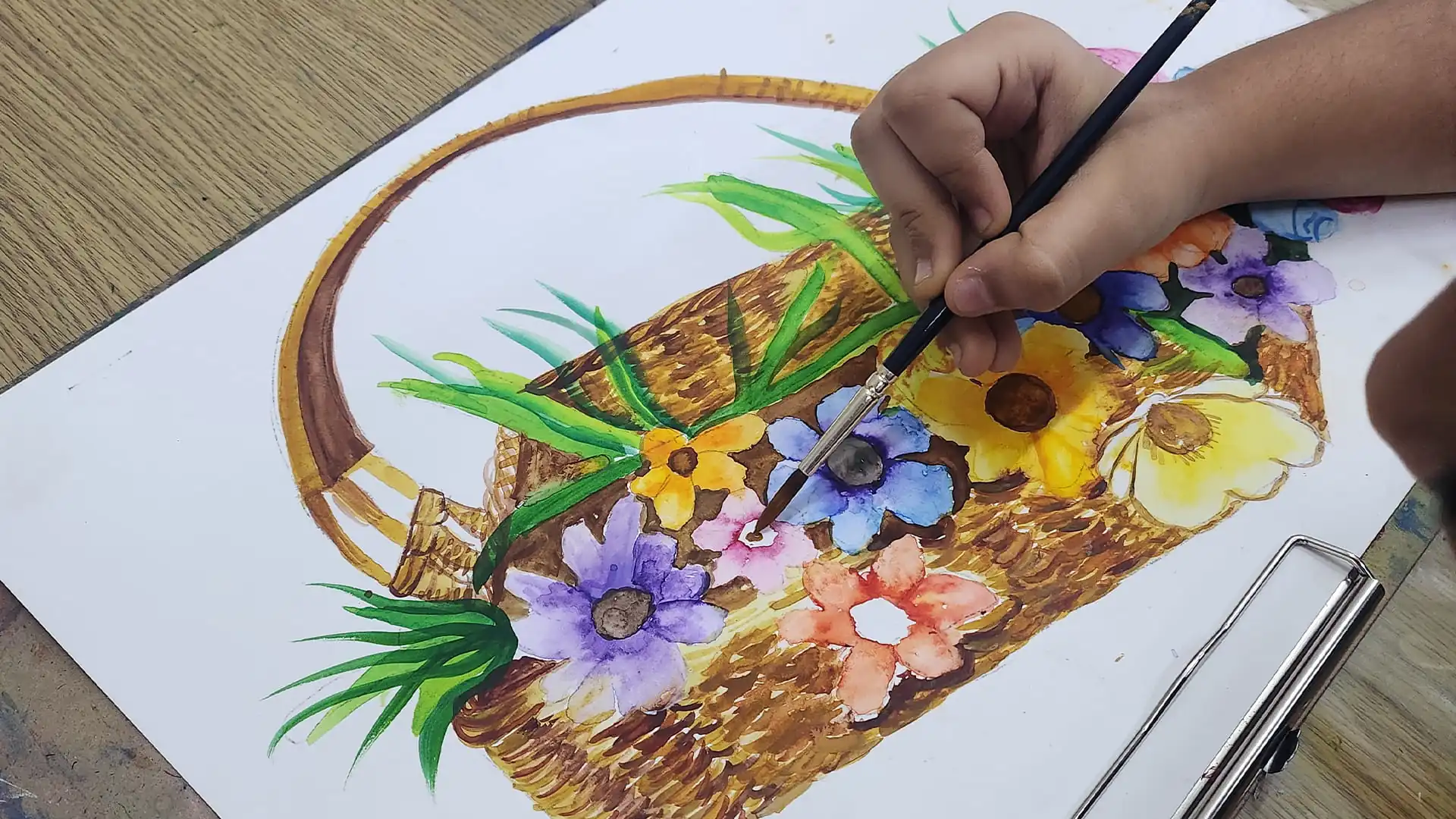
It is impossible to imagine the development process of children without drawing classes. It may seem to be an entertaining activity, but in fact, it represents an efficient tool to promote cognitive abilities of kids by developing certain types of coordination skills that children will apply further in their life – when writing, reading, or playing sport games.
This is why nowadays more and more parents try to look for Kids’ art classes that teach children something more than creativity. Art classes become a convenient way to train focus, motor, and coordination skills of young learners while they continue enjoying the process of creation.
Why Hand-Eye Coordination is Important for Children
Hand-eye coordination is about interpreting visual information and making controlled movements based on the received data. For children, coordination becomes crucial when completing various types of tasks in everyday life.
Good coordination allows children to:
- Write legibly
- Draw with precision
- Cut and craft
- Catch and throw things
- Read with ease
Developed coordination also means increased confidence in the child’s actions, whereas lack of it results in poor self-confidence and frustration while learning new things. In drawing class, children have many opportunities to train coordination skills because this kind of activity always involves interpretation of visual observations and physical movements at the same time.
How Drawing Promotes Motor Skills Development in Children
While a child works on his/her drawings, the brain performs several important functions. It processes visual information sent from eyes and makes children move hands accordingly.
Regular training improves the neural connections between the brain regions responsible for movement control and visual recognition of the surrounding world.
1. Shape Replication
By replicating various shapes, children develop spatial awareness and skills to control movements. As they learn how to copy a shape with higher accuracy, children learn how to draw lines, angles, and other figures.
2. Pencil Control
While drawing, children learn how to change the pressure and grip in order to draw more precisely. This contributes to fine motor skills development.
3. Visual Attention
While drawing an object, a child should concentrate and focus on visual aspects of the subject to copy its shapes accurately.
4. Finger and Wrist Movement
While developing the drawing techniques, children train finger movements required for writing, crafting, and other kinds of classroom activities.
One of the advantages is that all activities in drawing lessons engage children. They do not experience stress while learning new things; instead, they just enjoy the process of creating their own masterpieces.
Why Drawing Classes Are Effective for Coordination Development
Art classes conducted by professionals usually include special activities that can help children develop the necessary coordination skills. Instructors provide a variety of challenging tasks related to visual assessment and movement accuracy.
Unlike video games that keep children entertained and distracted, art classes make children actively work – they have to think, observe, and move.
Improvements Parents Commonly Notice
Parents usually note improvements in the following spheres of a child’s development:
- Writing skills
- Attention span
- Reaction rate
- Patience
- Self-confidence
All those effects of drawing classes go far beyond the sphere of art and positively affect children’s learning progress in general.
At last, art becomes a perfect environment where children can create freely without being afraid to make mistakes. Therefore, it motivates them to experiment and improve drawing techniques constantly.