
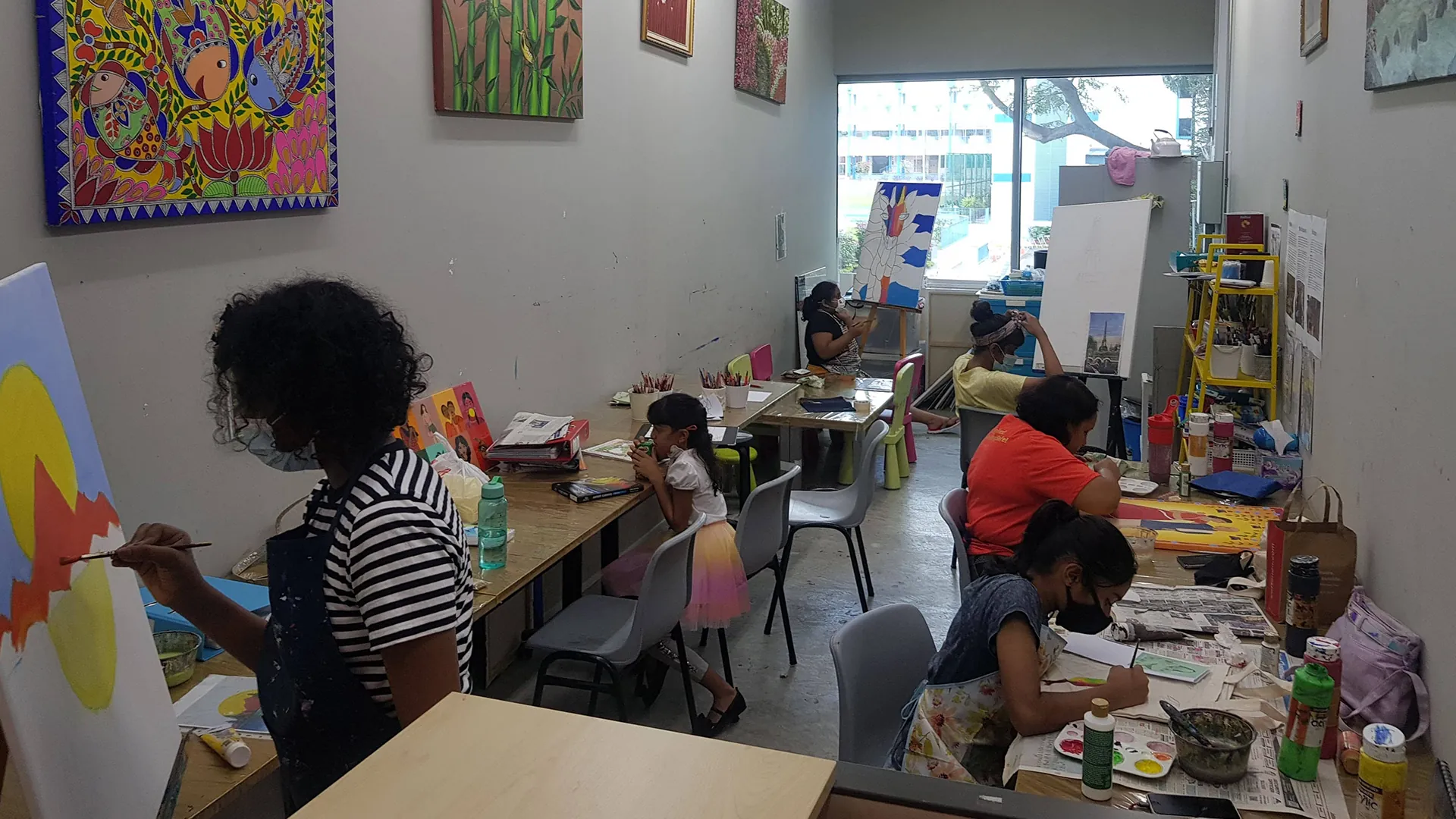
A four year old and a fifteen year old can both love art, but they need very different kinds of classes. One is still discovering how a crayon moves across paper. The other may be working on shading, perspective and a personal style. Putting them in the same lesson would frustrate both.
That is why age-based art classes matter. When parents look at art classes by age in Singapore, they are really asking whether the teaching will match their child’s stage. This article gives an inside look at how lessons are adapted across age groups, from first-time beginners to advanced young artists.
Why Age Changes Everything in Art Teaching
Children develop at different speeds, but some patterns are consistent across ages:
- Attention span grows with age, so younger children need shorter, more varied activities
- Hand control improves over time, which affects how detailed a task can be
- Ability to plan develops gradually, so older students can handle multi step projects
- Interest in realism often increases in later primary years, when children start to care whether a drawing looks “right”
- Independence grows, allowing older students to make more of their own decisions
A well designed age appropriate art curriculum works with these changes rather than against them.
Ages 3 to 5: Exploring and Experimenting
At this stage, the goal is enjoyment and discovery. Classes tend to be playful and hands-on, with a variety of materials and short activities.
What it usually involves:
- Exploring colour, shapes and textures
- Practising holding crayons, brushes and chalk
- Simple themes children can relate to, such as animals, food or seasons
- Lots of sensory activity, including painting, printing and collage
- Short instructions and frequent changes of activity to match attention span
The focus is on process, not perfect results. Fine motor skills, confidence and a love of making are the real outcomes. Parents of younger children can ask the team how this stage is run in practice.
Ages 6 to 8: Building Basic Skills
Children in this range are ready for more structure. They can follow multi step instructions and start learning how to draw and paint with intention.
Typical focus areas:
- Drawing people, animals and objects with more recognisable form
- Introduction to colour mixing and simple colour theory
- Basic composition, such as placing the main subject and a background
- Early observation from simple real objects
- Short projects that can be finished in one or two sessions
Lessons often combine a brief demonstration with guided practice, followed by time for children to add their own ideas.
Ages 9 to 12: Developing Technique
This is often when children become more critical of their own work, and it is a good time to give them real tools to improve. Teaching shifts toward technique and observation.
What changes:
- Drawing from observation with attention to proportion
- Introduction to shading and tone
- Early perspective and sense of space
- More deliberate use of composition
- Longer projects with several stages
- Introduction to a wider range of mediums, such as watercolour and acrylic
Assignments become more demanding, but they are broken into manageable steps so children feel challenged without being overwhelmed.
Ages 13 to 17: Refining Skills and Finding a Voice
Teen students can work with greater independence and depth. Instruction focuses on advanced skills while encouraging personal direction.
Typical areas include:
- Advanced drawing and shading techniques
- Detailed observational work such as portraits and figures
- Composition and visual storytelling
- Experimenting with mediums and developing a personal style
- Planning and completing longer, more ambitious pieces
- Building a body of work for school applications, competitions or portfolios
At this level, the instructor acts more like a mentor, giving feedback and encouraging students to make their own artistic decisions. You can see how this is structured on the teen art classes page.
What Changes Across Age Groups
| Area | Younger children | Older children and teens |
| Pace | Short activities, frequent changes | Longer, focused work periods |
| Instruction | Simple, demonstration led | More detailed and technical |
| Projects | Quick, playful, process focused | Multi stage, outcome focused |
| Feedback | Encouragement and gentle guidance | Specific, constructive critique |
| Independence | Heavily guided | Increasingly self directed |
Beginners and Advanced Students Within the Same Age Group
Even within one age group, children differ. A nine year old with years of practice and a nine year old picking up a pencil for the first time will not need the same instructions. Instructors manage this by:
- Offering simpler or more challenging versions of the same task
- Asking different questions to push each child’s thinking
- Giving additional challenges to those who finish early
- Providing extra support to those building confidence
- Keeping groups small enough for individual attention
Moving Up Between Levels
Progression is based on readiness as well as age. A child may stay in a group a little longer to consolidate skills or move on once they are ready for more complex work. Parents are welcome to discuss their child’s progress and the right next step with the instructor.
Finding the Right Fit at Strokearts
At Strokearts, the children’s art classes are organised by age group so that pace, techniques and project difficulty match each stage. If you are not sure which group suits your child, you can ask through the contact page and the team can help you choose.
Frequently Asked Questions
Why are art classes grouped by age?
Children’s attention span, hand control and ability to plan change with age, so grouped classes allow lessons to match their development.
What do beginner art lessons for young children involve?
They usually involve playful, hands-on activities such as painting, collage and simple drawing, focused on exploring materials and building confidence.
When do children start learning techniques like shading and perspective?
These are typically introduced in the upper primary years, around ages nine to twelve, once children have built basic drawing and observation skills.
Can an advanced child join a class for an older age group?
It depends on the child and the studio. Speaking with the instructor about the child’s skills can help decide the best level.
How do advanced drawing classes differ from beginner classes?
Advanced classes involve more complex subjects, technical skills, longer projects and greater independence, with feedback focused on refinement and personal style.