
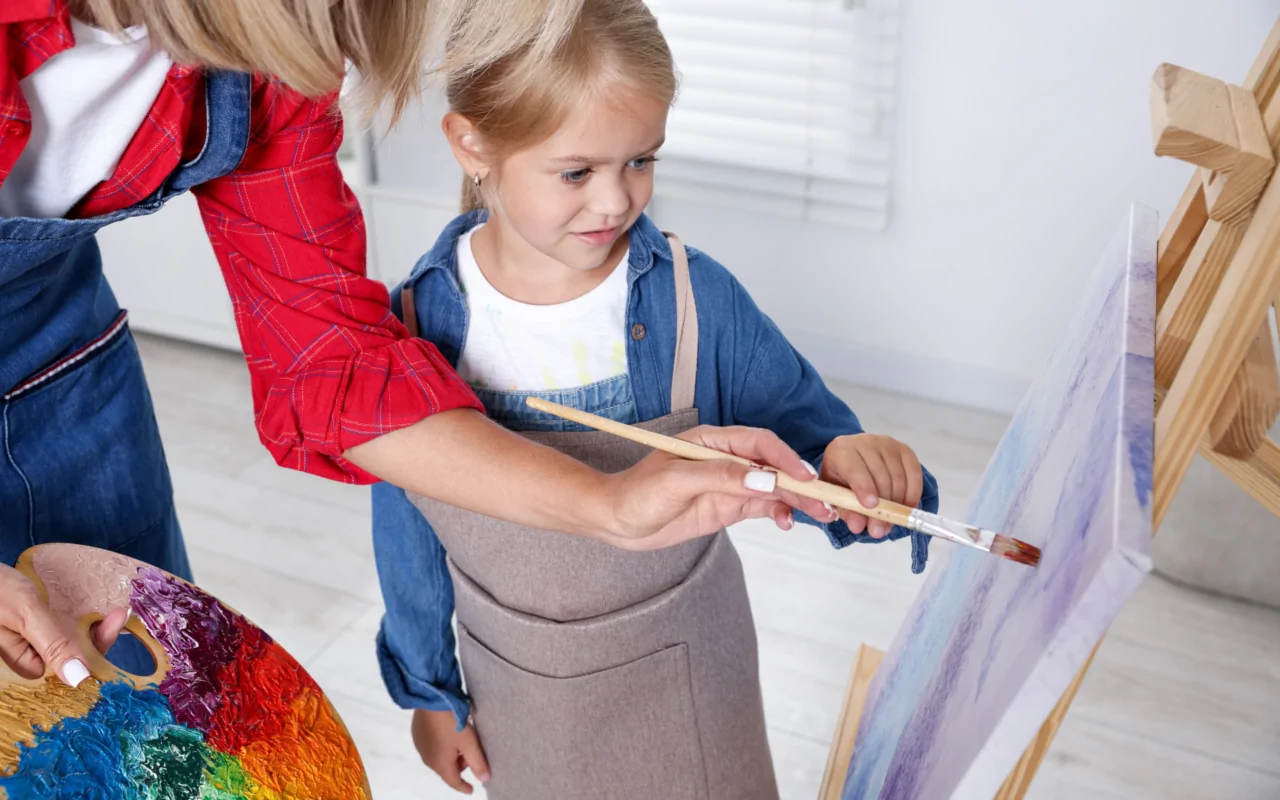
Most parents do not start searching for art classes because they want their child to become an artist. The search usually begins somewhere else. A teacher mentions that a child struggles to stay focused. Homework becomes a daily negotiation. A once-confident child starts hesitating, second-guessing their answers, or avoiding tasks that feel difficult.
In Singapore, where children grow up in a structured and achievement-oriented environment, these moments stand out quickly. Parents begin looking for something that supports their child without adding more pressure. This is where many families turn to children’s art classes in Singapore, not as an extra activity, but as a form of support.
Focus Develops When Children Are Genuinely Engaged
Focus is often mistaken for obedience. Sitting still. Finishing quickly. Following instructions without distraction. Parents know this is not how attention really works.
Many children who struggle to focus in class can spend long stretches drawing, colouring, or painting at home. The difference is not ability. It is engagement.
Art allows children to settle into an activity at their own pace. There is enough challenge to hold interest, but not so much pressure that the mind shuts down. Children stay with the task because they want to, not because they are told to.
Over time, this kind of sustained engagement strengthens attention naturally. Parents often notice that children who attend regular art classes become calmer during other activities as well. They rush less. They stay with tasks longer. Focus improves quietly, without force.
This is one of the reasons art continues to be valued in discussions around art for child development.
Confidence Comes From Making Choices, Not Getting Answers Right
Confidence does not appear because someone says “well done” repeatedly. It grows when children realise they can make decisions and live with the outcome.
In art classes, children make choices constantly. Which colours to use. How to shape a line. Whether to change direction halfway through. These decisions belong to the child.
There is no single correct result. When a child completes a piece of work and recognises it as their own, the sense of ownership matters. They see that effort leads to outcome, even when the result is imperfect.
Parents often notice that children who were once hesitant begin to explain their ideas more freely. They are less afraid of being wrong. Confidence develops through experience, not performance.
Art Changes How Children Experience Mistakes
Many children carry a quiet fear of mistakes. This fear can look like perfectionism, avoidance, or frustration when things do not go as planned.
Art offers a different experience. A line goes in the wrong direction. A colour looks unexpected. Instead of erasing or starting over, children are encouraged to work with what has happened.
That small shift matters. Mistakes stop feeling like failures. They become part of the process.
Parents looking into kids creativity Singapore programmes often notice that this mindset carries over into other areas. Children become more willing to try again. They recover faster when something does not work the first time.
Art Gives Children Another Way to Express Themselves
Not all children are comfortable expressing thoughts and emotions with words. Some struggle to explain how they feel. Others avoid talking about it altogether.
Art provides another outlet. Through colour, form, and movement, children express things they may not yet have the language for.
Parents frequently notice that children seem calmer after art classes. There is a sense of release, even if the child cannot articulate it. Over time, this emotional expression supports better self-regulation, which in turn supports focus and confidence.
Structure Exists, Just Without Pressure
Some parents worry that art classes lack discipline. In practice, good art programmes are carefully structured.
Children learn to follow steps, manage materials, and work on projects over time. They practise patience and planning. The difference is that the structure does not feel restrictive.
This balance is important, especially for children who struggle in highly academic settings. They experience discipline in a way that feels supportive rather than stressful.
Social Confidence Develops Naturally in Art Classes
Art classes are usually small group environments. Children work alongside others without competing.
Each artwork is different. Comparison fades into the background. Children learn to respect different ideas and approaches.
Quieter children find it easier to engage because attention is on the activity, not on speaking. More expressive children learn to slow down and observe. Over time, children become comfortable sharing their work and listening to others.
Parents often notice improved social confidence without their child being pushed into situations they are not ready for.
Why Art Continues to Matter for Families in Singapore
Singapore parents are practical. Time is limited. Activities are chosen carefully.
Art remains part of many children’s routines because it supports skills that academic learning alone may not fully address. Focus. Confidence. Emotional awareness. Creative thinking.
These qualities shape how children approach challenges and uncertainty later in life. This long-term perspective is why children’s art classes Singapore continue to hold value, even in academically focused households.
Choosing an Art Programme That Supports Children Properly
Parents quickly realise that not all art classes feel the same. Some rush children through activities. Others focus too heavily on outcomes.
What tends to work better is an environment where children are guided without being controlled, where class sizes allow attention, and where ideas are taken seriously.
At Strokearts, children’s programmes are designed with this understanding. Different personalities are expected. Some children talk through their work. Others stay quietly focused. Both are supported.
Parents are encouraged to observe, ask questions, and see how their child responds. That response often matters more than any description.
A Thoughtful Starting Point for Parents
Art classes are not about producing impressive drawings. They are about giving children a space where effort feels safe and curiosity is encouraged.
If you are exploring children’s art classes in Singapore to support focus and confidence, learning more about available programmes is a natural first step.
Sometimes, all a child needs is one place where they can slow down, try freely, and feel capable. From there, changes often appear in ways parents did not expect, well beyond the art room.
