
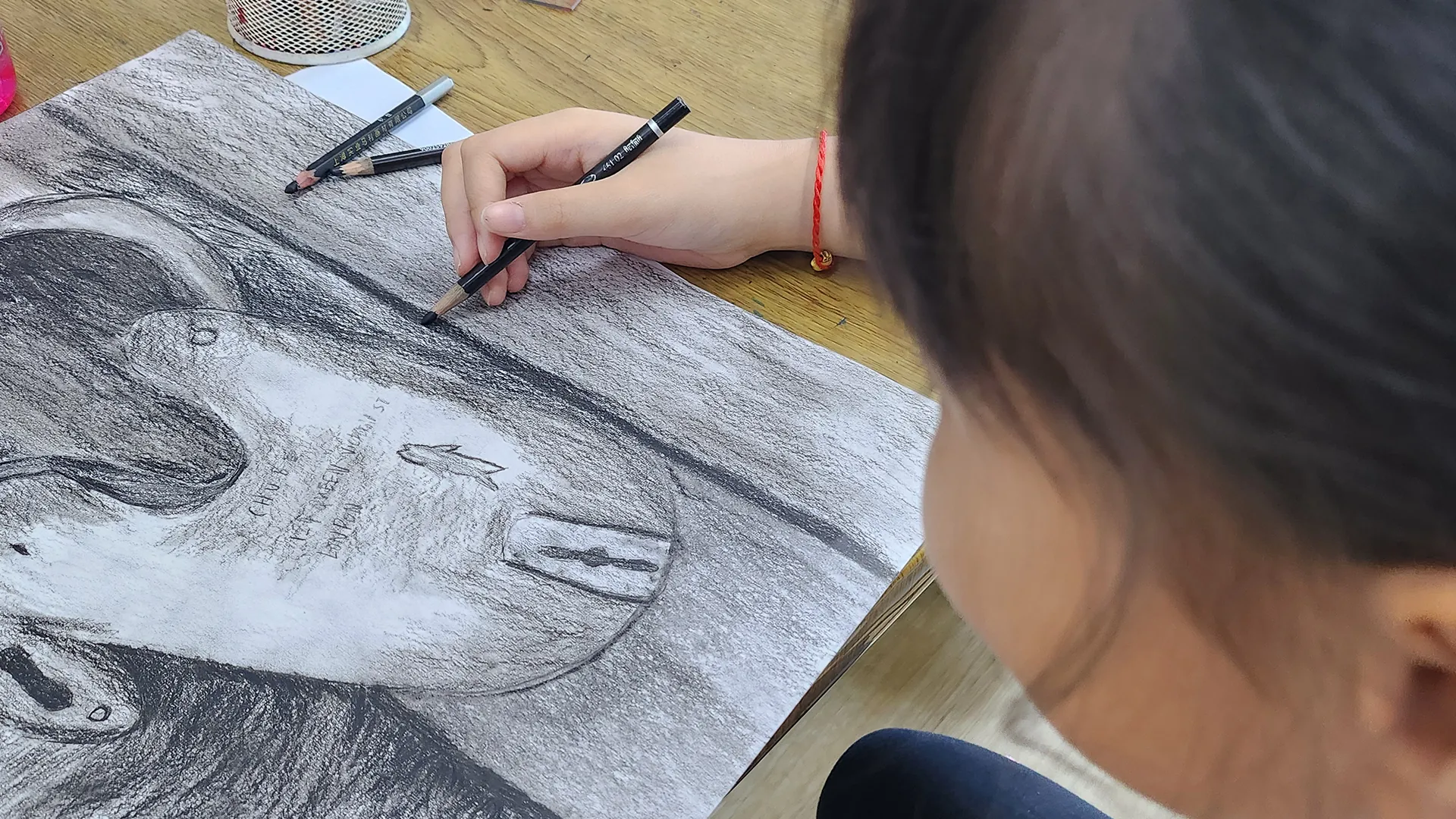
Every year, thousands of Singaporean students apply for Direct School Admission, hoping their talent will speak louder than their PSLE or O Level scores. For students with a passion for art, this usually means one thing: building a portfolio strong enough to catch the eye of a panel that has already seen hundreds of submissions that year.
If your child is aiming for a DSA art placement, or specifically for the School of the Arts (SOTA), the portfolio is not just a formality. It is often the single most important part of the entire application. A well built portfolio can open doors even when academic grades are average. A weak one can undo months of preparation, no matter how talented the child actually is.
This guide breaks down what a strong art portfolio for DSA or SOTA actually needs, the mistakes most families make, and a realistic timeline to build one properly instead of rushing it in the final months.
What Exactly Is an Art Portfolio for DSA/SOTA?
A DSA or SOTA art portfolio is a curated collection of a student’s artwork, submitted as part of the direct admission process, to demonstrate artistic ability, creative thinking, and technical skill beyond what a standard interview or test can show.
Unlike a school assignment folder, a portfolio is not simply “everything the child has drawn.” It is a deliberately selected set of pieces that tells a story about the student’s range, growth, and personal voice as an artist. Panels reviewing DSA and SOTA applications are looking for evidence of original thinking, not just neat technique.
Why the Portfolio Matters More Than Most Parents Realise
Many parents assume that a strong academic record combined with “a few nice drawings” will be enough. In reality, art portfolios for direct school admission are assessed with the same seriousness as academic transcripts, sometimes more so, because they reveal things grades cannot.
Panels are specifically looking for:
- Genuine interest and consistency in creating art over time, not a portfolio assembled in a rush
- A range of mediums and subject matter, showing the student can adapt and experiment
- Technical fundamentals such as proportion, shading, composition, and colour understanding
- Original ideas and personal perspective, rather than copied or heavily referenced work
- Improvement and growth, often shown through work created across different points in time
For SOTA in particular, the school has publicly stated that it looks for students with strong creative potential and a genuine passion for the arts, not simply students who are technically polished. This means a portfolio with heart and a clear point of view often stands out more than one that is technically flawless but generic.
How Many Pieces Should Be in the Portfolio?
Most DSA and SOTA art applications ask for somewhere between eight and fifteen pieces, though exact numbers vary by year and by school, so families should always check the specific requirements published for that application cycle.
Rather than fixating on an exact count, focus on covering these categories well:
- Observational drawing – still life, portraits, or scenes drawn from direct observation, showing accuracy and control
- Imaginative or conceptual work – pieces that show original ideas, storytelling, or personal themes
- Different mediums – at least two to three mediums such as pencil, charcoal, watercolour, acrylic, or digital art
- Process work – sketches, studies, or preliminary drafts that show how a final piece developed
- A signature piece – one strongest work that best represents the student’s personal style and effort
A portfolio with six to eight excellent, well rounded pieces will almost always outperform fifteen rushed ones.
It is also worth remembering that DSA and SOTA applicants still need to keep up with regular schoolwork while building a portfolio, since academic performance is often reviewed alongside artistic ability. Many families choose to pair art preparation with structured academic tuition support during this period, so the student is not stretched too thin juggling both at the last minute.
Common Mistakes That Weaken a Portfolio
After reviewing many student portfolios over the years, a few recurring issues show up again and again.
Submitting only “safe” or similar looking pieces. If every piece is a pencil portrait of a similar style, the panel cannot judge range or versatility.
Ignoring process work entirely. Many students only submit finished, polished pieces. Sketchbooks, studies, and drafts actually help demonstrate genuine skill development and thought process, which panels value highly.
Starting too late. A portfolio built in six weeks looks noticeably different from one built over six to twelve months. Rushed portfolios tend to lack depth and often repeat similar subjects due to time pressure.
Overly complex or trend chasing pieces. Trying to impress with an overly ambitious piece that is not executed well often does more harm than a simpler piece executed confidently and cleanly.
No personal voice. Technically accurate copies of photographs or existing artworks, without any personal interpretation, tend to score lower than simpler pieces that show original thinking.
A Realistic Timeline for Building a Strong Portfolio
8 to 12 months before submission Begin building a personal sketchbook habit. Explore different mediums and subjects without pressure. This is the exploration phase, and it should not feel like exam preparation yet.
5 to 8 months before submission Start identifying strengths and preferred mediums. Begin refining a shortlist of stronger pieces and start creating a few new, deliberate works aimed at the portfolio.
3 to 5 months before submission Finalise medium selection for each piece. Begin creating the signature piece and any pieces that need more time, such as larger paintings or detailed observational work.
1 to 2 months before submission Review the full set as a collection, not individual pieces. Check for balance across mediums, subjects, and skill demonstration. Get feedback from an experienced art instructor who is not the student’s parent, since objective external feedback is far more useful at this stage.
Final weeks Focus only on presentation, documentation, and formatting requirements, not new artwork. This is not the time to attempt an entirely new piece under pressure.
How Strokearts Supports DSA and SOTA Portfolio Preparation
At Strokearts, students working towards DSA and SOTA applications are guided through structured sketching and painting classes designed to build the exact fundamentals panels look for, including observational accuracy, medium versatility, and confident composition. Beyond technical training, instructors work with students individually to help identify a personal style and direction, rather than pushing every student toward the same look.
Because portfolio building takes time, families are encouraged to start the process well before application season, ideally through Strokearts’ ongoing sketching and art programs rather than a last minute intensive crash course.
Frequently Asked Questions
When should my child start preparing an art portfolio for DSA or SOTA? Ideally eight to twelve months before the application, so there is enough time to explore mediums, build a signature piece, and refine the overall collection without rushing.
Does the portfolio need to include only finished, polished artwork? No. Including sketches, studies, and process work is encouraged, as it helps panels see genuine skill development and thinking, not just final results.
How many art pieces are usually required for DSA or SOTA applications? This varies by school and by year, but most applications request somewhere between eight and fifteen pieces. Always confirm the exact number against the current year’s official requirements.
Can a student with average grades still get in through DSA with a strong art portfolio? Yes. DSA exists specifically to recognise talent that may not be reflected in academic grades alone, and a strong, genuine portfolio is often the deciding factor in these applications. That said, most schools still expect a reasonable academic standing alongside the portfolio, so students balancing both often find it helpful to pair portfolio preparation with steady academic tuition support to keep core subjects on track during this period.
Should parents help create the artwork for the portfolio? No. Panels are experienced at identifying work that does not reflect a student’s actual skill level. Guidance, feedback, and structured practice are helpful, but the artwork itself should be the student’s own.